Inside the World of Applied Mechanics
A world where stories unfold all around you, where you decide what to follow, and where your presence matters just as much as the action onstage?
For Philadelphia-based theater company Applied Mechanics, this isn't a theatrical experiment. It's the foundation of their artistic practice.
We sat down with director, creator, and company member Rebecca Wright to explore how an ambitious theatrical experiment began in a Philadelphia apartment, and why the city deserves far more recognition for its extraordinary creative community.
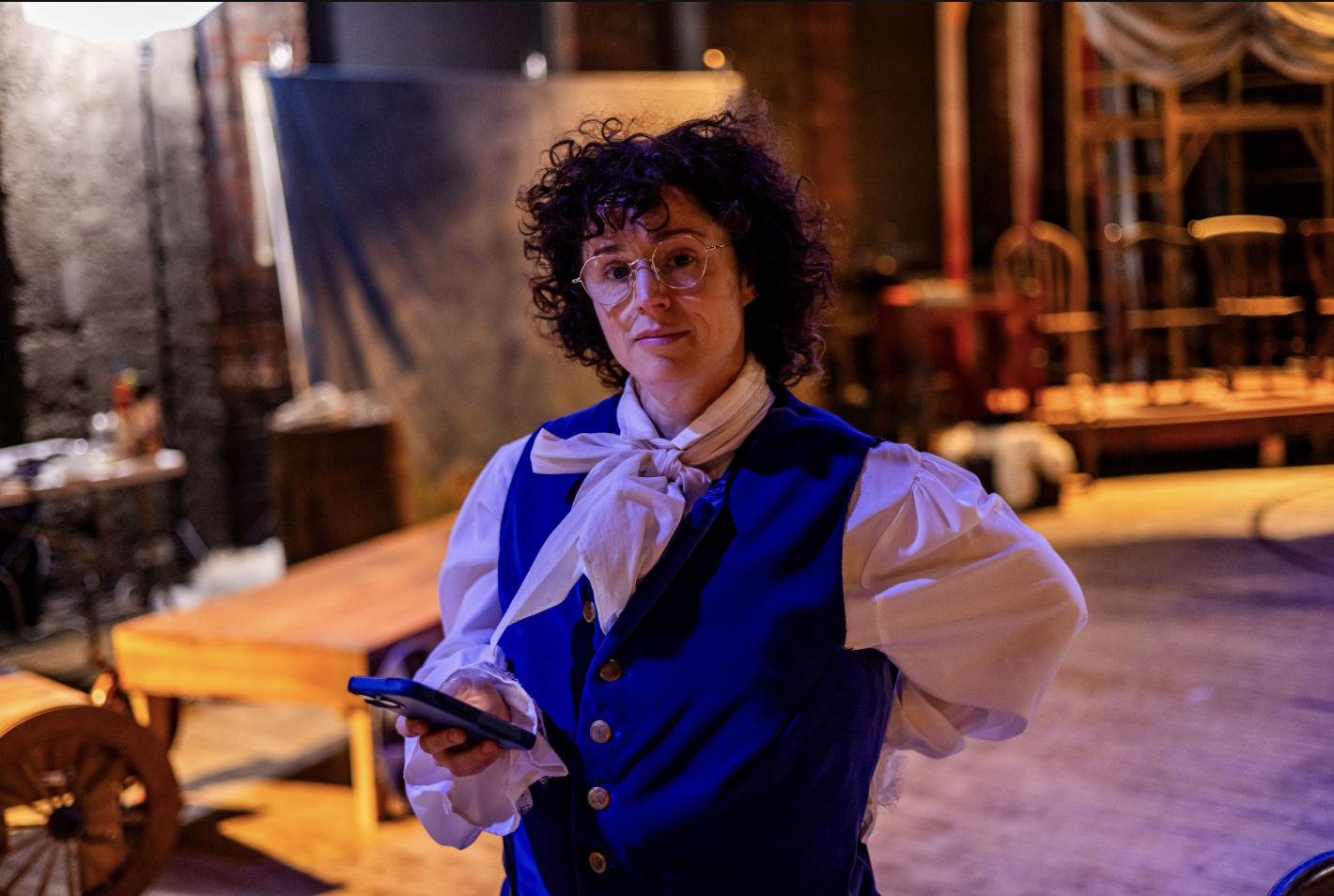
Photo credit is Ashley Smith with Wide Eyed Studios unless otherwise noted
What is immersive theater
Immersive theater can mean many things. For Applied Mechanics, it begins with a simple but radical idea: instead of sitting in front of a stage, the audience exists inside the world of the play.
The set surrounds you. Multiple stories unfold simultaneously. Actors move through different spaces, and the audience is free to decide where to go, what to watch, and which characters to follow. Every visitor experiences a slightly different version of the same performance.
As Rebecca explains, the audience becomes, in a sense, the author of its own experience.
But she makes an important distinction: this is still theater, not a game.
The audience isn't expected to perform. There are no elaborate tasks to complete or characters to become. You might be offered a cookie, asked to hold a sign, or simply invited to stand somewhere unexpected.
The participation is gentle. The freedom is enormous.
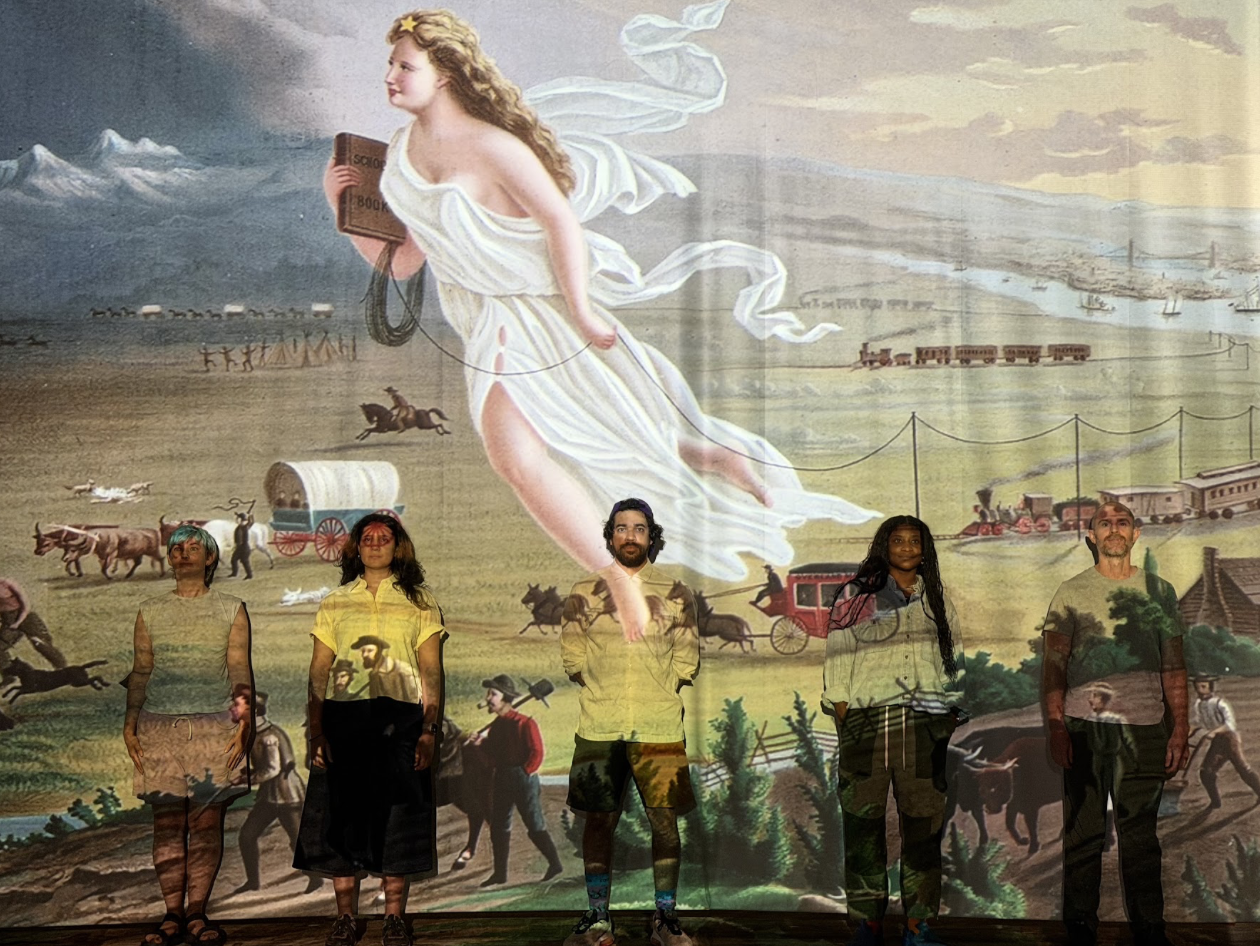
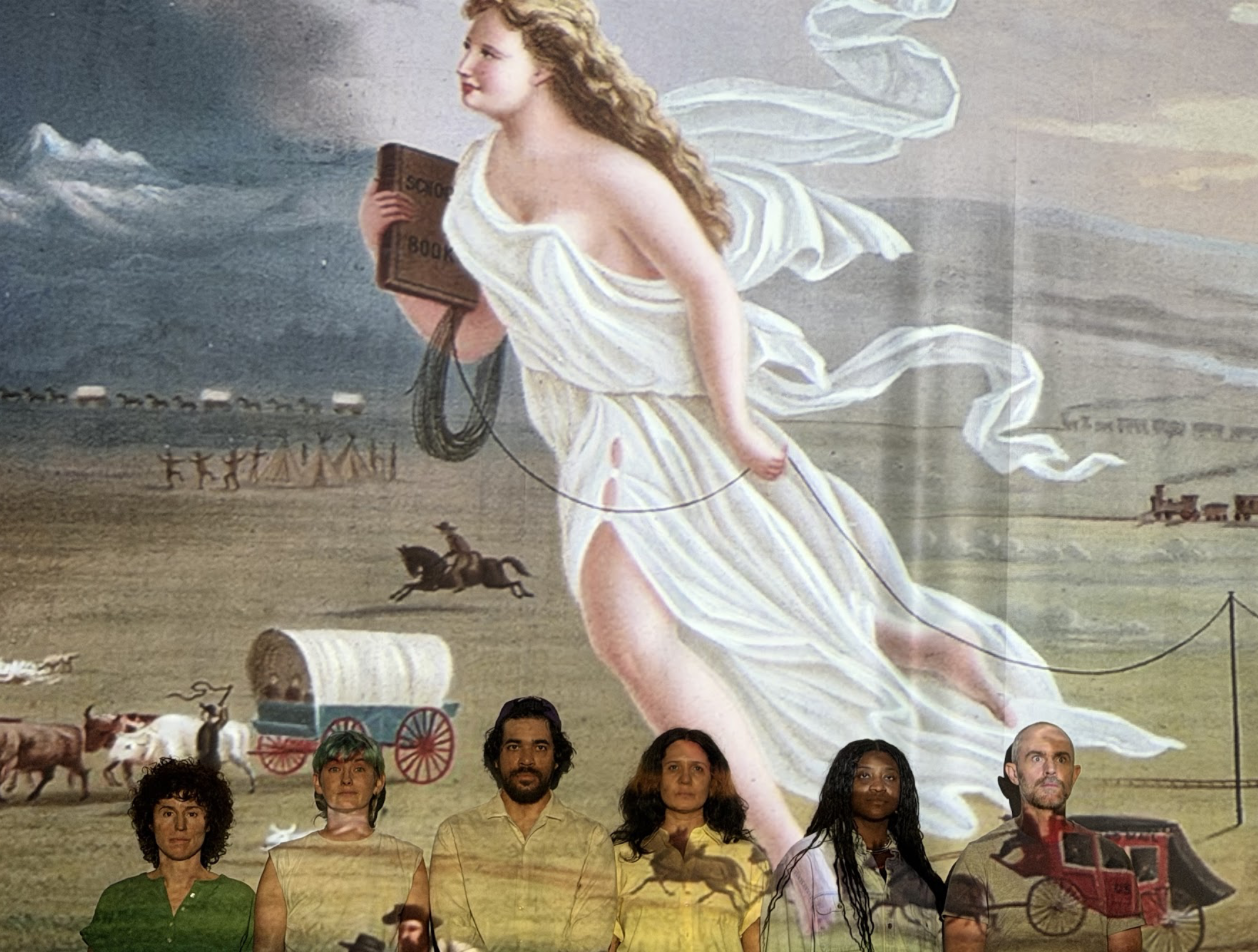
And even when a production allows you to sit down, you might find yourself sitting on a mountain range, a train, or a small hill while the actors and their stories move around you.
The traditional boundary between stage and audience quietly disappears.
“The participation is gentle.
The freedom is enormous.”
There's no such thing as just watching
One of Rebecca's most compelling ideas challenges something we tend to take for granted about theater: the assumption that audiences are passive observers.
She argues that there is no such thing as simply sitting back and watching a live performance.
Actors can sense whether an audience is engaged. They know when someone is paying attention, when the energy changes, and when a moment resonates.
The relationship is always reciprocal.
Applied Mechanics takes that relationship and makes it impossible to ignore.
Instead of hiding the audience in darkness, the company places spectators directly inside the theatrical environment. Their choices, movements, attention, and physical presence become part of the experience.
For Rebecca, this isn't about forcing people out of their comfort zones. In fact, she describes herself as a shy person and has no desire to make unprepared audience members perform. It's about giving people something much more meaningful: agency.
“The freedom to choose where to stand, whom to follow, and how to experience the story”
“And perhaps, by the end of the evening, to feel a little more aware of their own importance in the world around them”
From an apartment to an entire theatrical universe
The story of Applied Mechanics began almost accidentally.
Rebecca and designer Maria Shaplin were early in their careers when they started imagining a different kind of theater.
They wanted to create performances that surrounded the audience, felt like parties, and offered entire worlds to explore. They couldn't imagine anyone hiring them to make such unconventional work. So they decided to do it themselves.
Their first productions took place in Rebecca's apartment. They moved out the furniture, transformed rooms into theatrical environments, and invited actors to collaborate. They couldn't afford to pay performers, so they cooked dinner for everyone at rehearsals.
Stories unfolded across different rooms, with characters and narratives moving through the apartment while audiences wandered freely.
Rebecca remembers those early performances as something like parties for wallflowers.
You could have a snack, enjoy a drink, observe the action, and participate simply by being present.
What began as an intimate experiment gradually expanded into larger productions, unconventional venues, and increasingly ambitious theatrical worlds.
One of the company's major turning points came in 2012–2013, when Applied Mechanics created an ambitious production at Philadelphia's Neighborhood House.
The performance brought together 26 actors in a sweeping, movement-driven theatrical work exploring approximately 25 years of Napoleonic European history. Different parts of the world existed simultaneously within the same space.
Audiences could move between stories, perspectives, and historical moments, encountering an enormous interconnected narrative.
And behind the scenes, the company was still doing what it had done from the beginning: building a world together and cooking dinner for the entire cast at rehearsals.
Years later, returning to Neighborhood House to create another production carries special meaning for Rebecca. The space represents not just an important chapter in the company's history, but a reminder of how far an unconventional idea can travel when artists are willing to build it themselves.
Theater as a way of understanding the world
For Rebecca, theater is far more than a profession or a form of entertainment.
It's the language through which she understands and communicates with the world.
It's also a place where she can put her values into practice.
Through theater, she can gather people into a shared space and invite them to imagine different social structures, relationships, and possible futures.
This is where the immersive format becomes particularly interesting.
When audiences enter a theatrical world, they don't simply observe how that world functions. They navigate it. They make decisions within it. They experience what it means to be present and to have choices.
Rebecca sees the possibility that this experience can extend beyond the performance itself.
“An audience member who leaves the theater feeling more empowered as a participant in art might also begin to feel more empowered as a participant in civic life.”Rebecca Wright
Your favorite theater company's favorite theater company
Applied Mechanics has developed an audience that reflects the diversity of Philadelphia's creative and intellectual communities. Some followers have been attending its productions since 2009. Others have discovered the company more recently through the city's broader theater scene.
Its work has a particular appeal among artists, students, activists, and academics, alongside audiences who regularly attend Philadelphia's larger theaters.
One company member, Brett, has a favorite description of Applied Mechanics:
Your favorite theater company's favorite theater company.
It's a playful phrase, but it captures something meaningful about the company's place in Philadelphia's artistic landscape.
Applied Mechanics isn't simply interested in producing performances. It is continuously questioning what theater can be, how it can function, and what kind of relationship it can create between people.
Philadelphia: an extraordinary art city that deserves more
Although Rebecca grew up in Wisconsin and still feels a strong connection to the Midwest, Philadelphia has become the place she's called home longer than anywhere else.
And she has no doubts about the city's creative potential.
Some of her favorite artists in the world live and work here.
She describes Philadelphia as a remarkable center of experimental, boundary-pushing creativity across artistic disciplines.
Yet she also believes that the city is profoundly undercelebrated.
“For all the talent, originality, and cultural energy Philadelphia produces, its artists receive far less recognition and support than they deserve”
Rebecca is particularly critical of the city's approach to arts funding, contrasting it with places that have increased their investment in artists and cultural organizations.
For her, the arts are among Philadelphia's most valuable contributions to the wider world.
And supporting them shouldn't be an afterthought.
The future artists deserve
Asked what she would change if she could reshape the world, Rebecca offers an answer that is both simple and revealing.
She wouldn't necessarily change her artistic practice.
She would continue making theater, experimenting with form, and bringing people together.
What she would change are the conditions under which artists are expected to survive.
“I dream of doing the same work in a country with universal healthcare and a basic income, where creating art doesn't require living without essential economic security”
For Rebecca, these aren't impossible utopian fantasies. They're achievable social protections that would make it easier for artists to build sustainable lives.
And perhaps that brings us back to the central idea behind Applied Mechanics.
The company creates imaginary worlds in which people have the freedom to explore, choose, and participate. But its work also invites us to consider what kind of world we want to create outside the theater. And whether we're willing to recognize our own role in shaping it.